Showing posts with label week six. Show all posts

Saturday, July 13, 2013

Composting

Since I've started this class and learned more about different methodologies used in urban agriculture I've been begging my boyfriend to buy my a compost bin that can kept inside. Sadly, I have not been able to convince him as of yet. But I did start composting this week. This actually happened on accident. I had been saving this milk gallon to transplant a different plant but hadn't bought soil for it yet. So, this empty gallon was just sitting in my container garden, acting as a make shift green house for one of my other plants. One day I was getting rid of some dead parts of my plants and just threw them into the gallon because I didn't want to walk all the way up to my apartment just to throw them away. Then a few days later I had to get rid of one of my plants because it had completely died so I threw it into the gallon as well. That's when it occurred to me that I could still compost despite living in a apartment.

Currently in my compost: dead plants, left over lettuce harvest, and eggshells.
I cook a lot. I cook every day and I like to include vegetables. Sometimes I have too many vegetables left over that I don't use right away that I used to end up just having to dispose of. But now I can use them in my compost. I added some leftover lettuce harvest to my compost. I also included egg shells. I'm a big egg person. I love over-easy eggs in the morning when I have the time to make them. Maybe not the most legitimate source, but I feel like it's information is similar to what we've learned in class, is this infographic I found on Pinterest. I've been using it as a guide to my composting. Here take a look:

If you can't read it here's a link to the actual image.
Composting is awesome! Seriously, it's like the ultimate form of recycling--and what's cooler than recycling? Nothing.

Friday, July 12, 2013

My Container Garden and Monticello Ave Community Garden

Monticello is a street next to where I live. I've driven up and down it many times. For some reason, the other day I was looking up community gardens around my area. I was surprised to find out that Monticello had a community garden literally around the corner from where I live. Seriously, it's like a 3 minute walk. It was a surprise to me because I had never EVER before seen a garden where Google maps was telling me it was located. I had driven past that way millions of times (ok, maybe not millions), and not once did I see this mythical garden. By some stroke of luck, as I was returning home after driving my boyfriend to work, there was no parking on the street in front of where I live because it was still an early and ungodly hour. So I had to drive around the block--which forced me to drive down Monticello again. This time, I noticed an area with no cars parked in front of it and a ton of greenery. I parked my car and much to my surprise, I had found it.
Monticello Ave Community Garden
The Welcome sign.
I actually entered the garden later on in the day after taking a lovely walk with my boyfriend. It looks very different compared to UFarm. I like to think that UFarm seems a little more lively, probably because it's maintained everyday. From the look of Monticello's community garden, it wasn't being maintained on a daily basis. So there's room for growth and improvement. Here are a few pictures I took from the inside of the garden.
One of the beds in the community garden.
The pathways were pretty narrow.
They had a pretty large raspberry plant growing which I thought was really cool!

Finding the community garden was pretty lucky for me because I recently started my own container garden. I've found that its hard to grow fruiting plants in containers if the container is too small for them. Even if you think a container is large enough, sometimes it isn't. This would be a good think to research before you decide you're going to arbitrary plant it.
My container plants, which were smashed to some degree by an unknown entity. :(
Overall, the container garden started alright despite most of my plants being planted in things too small. I actually had them originally growing on my window sill but they didn't get enough light so I moved them outside next to my landlord's patio, praying that he wouldn't ask me to get rid of them. It's been almost three weeks now and nothing yet! Around week two after starting my container garden, I noticed my plants getting eaten by some unknown pests. One night, I was returning home from having dinner out with friends and I went to the back to check my plants. On one of my poor plants were EAR WIGS. They were EVERYWHERE. They were just assaulting my plants. They covered it's leaves like you couldn't even tell they were leaves anymore. Just a black glob covering my poor plants.

This is the poor plant that was assaulted by ear wigs.
And if you don't know what ear wigs are, here's a picture:
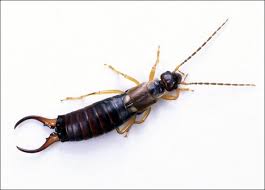
They're ugly little pests.
Anyways, I must now scour the internet for some sort of solution to my ear wig infestation. Here's a panoramic I took Monticello. 
Look, my boyfriend's enraptured by the sunlight.


Introduction: Race and the Food System

Link to article: http://www.whyhunger.org/getinfo/showArticle/articleId/928

This article paints an alarming picture about hunger in the United States. It depicts a situation in which a large amount of Americans going hungry are of a colored race. It goes on to ask why this occurs then explains that the reason for this is because of a pattern that started long ago that still repeats itself today. This pattern was seen in the early years of U.S. primarily through slavery and conquest of the nation. Historically, Africans in history were discriminated against and seen as inferior which resulted in their poor treatment. With the expansion of the U.S. to the west many Native American communities were taken advantage of. This tradition of exploitation is still alive today through industrial farming. Industrial farms are looking to conquest the economic frontiers. Similar to how the early settlers of the nation took advantage of the people's lands, industrial farms continue to exploit and take advantage of Americans today, especially those located local to industrial farms. This pattern, I feel, is an important topic to focus on. It is not until we learn to break this pattern that our nation can focus on issues such as hunger that is destined for certain races. With urban agriculture now apart of the food system, it is important that we watch what kind of contribution it makes not only at a local setting but at a national setting as well.

Thursday, July 11, 2013

Our Failing Food System: Promoting Pesticide Resistance.

I stumbled upon this very informational website with it's own section about food and agriculture (link). It's the Union of Concerned Scientists. I think this site is very interesting because it's more applicable to me from a science perspective on the issues about food and agriculture in our society. In that section I stumbled upon the article: "Our Failing Food System: Promoting Pesticide Resistance." Here's the link to the original article: (link)

The article talks about the pitfalls of large-scale industrial farming that uses herbicides. The crops grown by these farmers are genetically engineered to be resistant to the herbicide developed by the same company. While at first effective, it was found that long term use of this herbicide encouraged the development of weeds that were resistant to it. The consequence of this was that once the weeds were resistant, they spread in a manner that could not be controlled. Farmers would then have to resort to using more herbicide and even heavy tilling--both unsustainable practices. The author mentions that the resistant strains could be avoided by alternation of herbicides; however, this practice is not promoted because it effects the financial gain of the company who both genetically modifies crops and produces the herbicides to treat them. Similarly, the situation with pests and pesticides has developed in that pests are becoming more resistant to pesticides. 

I think this article is interesting for a number of reasons. It addresses the issue of genetic engineering crops and the consequences of use of herbicide from a scientific perspective by listing different references and sources to support its claims. I feel like this issue can be applied to any sort of farm--even an urban one--because weeds and pests are not an isolated issue to industrial farms. My garden at home has a pest problem--these tiny pincher bugs keep eating my flowers! UFarmIIT has pests, though I don't believe it's become a problem yet. But the lesson that should be taken away is that practices should be taken to ensure sustainability. These types of farms grow crops on large scale and thus have to resort to large scale solutions to their pest and weed problems which may not always have our health in the best mind. The reason I bring up health is because I like the fact that our farm doesn't use herbicide or pesticides. For the most part, we have natural ways to ward off pests such as planting specific flowers. It's nice to know that food we're growing doesn't have any unwanted chemicals in it. That means our food is healthy and we're healthy.

I saw this in a pin on Pinterest and thought this was a rather neat trick. Here's the link to the source site. But it's a mixture of water, vinegar and some liquid dish soap that creates a weed killer mix. For a small scale farm or garden, this is a pretty easy way to get rid of weeds because every home has dish soap and water. Personally, I don't cook with vinegar, but I'm sure a lot of people other people do. So this could be a solution to weeds. Could large scale farmers use this method? Probably not unless it was executed correctly.


Sunday, July 7, 2013

Volunteering at Chicago Lights Urban Farm

Hannah and I taking a break from weeding at Chicago Lights Urban Farm!
On Saturday I volunteered at Chicago Lights Urban Farm (link). It's located at the corner of Hudson and Chicago, not too far from the Brown line stop. I live in the north west part of the city so it was a pretty convenient location for me and didn't take too long to get to. When I got there, I filled out some paper work and Stephanie, one of the staff members, gave us a tour of the farm. She told us the history not only about the farm but about the community around the farm as well. It was very interesting how the history of the community was very much a part of the history of the urban farm. 

The farm is divided into four main parts--at least that's how I was dividing them. The first part was the community plots where residents of the immediate neighborhood were given a plot of land and could grow whatever they wanted. The second part consisted of two hoop houses and the green house. I like to call this area indoor growing area. The third part was a larger area with lots of beds. This was the area specifically used for growing produce for sale. The fourth area consisted of a few small beds where children participating in the summer camp program could plant as well.
Weeding.
After a general introduction to the site, we were put to work. Hannah and I were both on site that Saturday which was nice to be working next to a familiar place. We were set to work on weeding the outer perimeter of the site. It is not easy pulling out weeds that have grown in between cracks in the side walk.
Chicago Lights Urban Farm has big worms everywhere!
I think the thing I like the most about Chicago Lights Urban Farm is how close the farm is with the community and vice versa. Almost every person who came into urban farm knew Stephanie and the other staff. The kids involved with the summer programs hang around the farm even outside of camp time. The neighborhood residents that were working on the farm were also friendly towards Hannah and I. They showed a general interest in us and were excited to hear that we were going to be continually involved in the farm for the coming weeks. 

Hopefully the heat won't pick up.